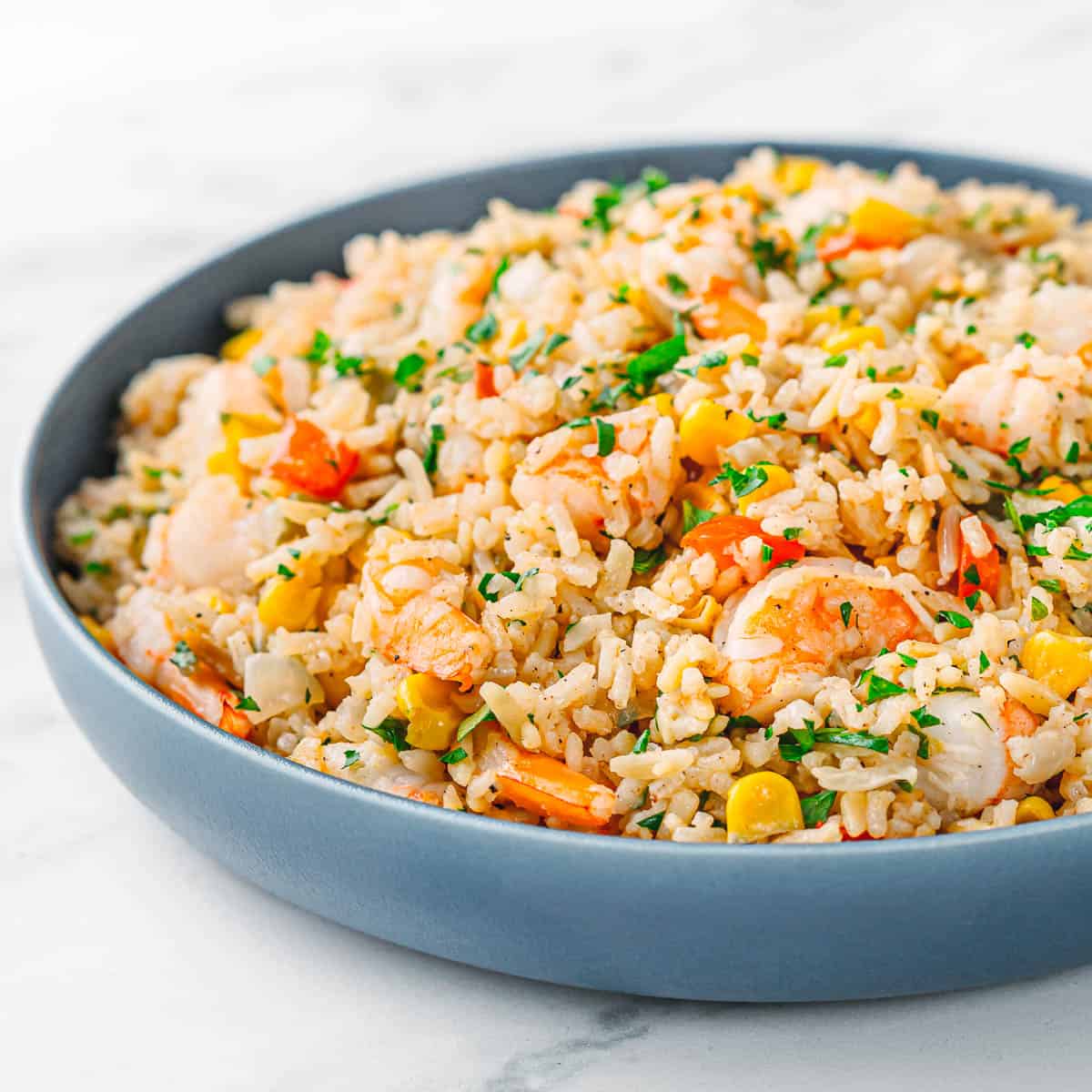
Shrimp Rice Pilaf
338kcal
Equipment
- a 3½-4 qt Dutch oven
- a spatula
Ingredients
- 1 pound shrimp (deveined, peeled and tail on)
- 1 cup canned whole corn kernel (drained)
- 1 cup long-grain white rice (rinsed and drained)
- ½ cup dry orzo pasta
- 2¾ cups low-sodium chicken broth (heated)
- 1 cup diced yellow onion
- ½ cup diced green bell pepper
- ½ cup diced red bell pepper
- 1 tablespoon minced garlic
- 4 tablespoons unsalted butter
- ½ teaspoon garlic powder
- ½ teaspoon onion powder
- 2 teaspoons fresh lemon juice
- ¼ teaspoon ground paprika
- zest from one lemon
- 1 teaspoon salt (and more to taste)
- ½ teaspoon black pepper (and more to taste)
- ½ cup chopped parsley leaves
Method
- In a bowl, combine shrimp, lemon juice, zest, ½ teaspoon of salt, and ¼ teaspoon of black pepper. Let marinate for a few minutes.
- In a 3½-quart Dutch oven, melt 2 tablespoons of butter over medium heat. Add the shrimp in batches and cook for 1 minute per side, or until nearly cooked through. Transfer to a plate and set aside.
- In the same pot, melt the remaining butter, then add the onion, red bell pepper, and green bell pepper. Cook for 2-3 minutes until soft, then add garlic and cook for 30 seconds until fragrant.
- Stir in the orzo for 2 minutes, then add the rice and stir for 4 minutes. Sprinkle in the paprika, onion powder, garlic powder, and the remaining salt and black pepper.
- Pour in the hot broth, scrape up any brown bits, and bring to a boil over high heat until the whole surface is bubbling. Then, reduce the heat to low, cover, and simmer for about 15 minutes, or until the liquid is absorbed.
- While the rice is cooking, remove the shrimp tails and chop them into small pieces. Set aside.
- Once the rice is cooked, remove from heat. Add the shrimp and corn, cover, and let sit for 10 minutes, or until the shrimp is cooked and the corn is heated through.
- Remove the lid, fluff the rice with fork and stir in chopped parsley. Add salt and lemon juice if needed before serving.
Nutrition
Calories338kcalCarbohydrates45gProtein18gFat10gSaturated Fat5gPolyunsaturated Fat1gMonounsaturated Fat3gTrans Fat0.3gCholesterol115mgSodium913mgPotassium411mgFiber3gSugar4gVitamin A1280IUVitamin C36mgCalcium79mgIron1mg
Notes
-
- Rinse the rice: Rinsing the rice before cooking helps remove excess starch on the surface of the grains. If not washed, the extra starch can cause the rice to become sticky and mushy as it cooks. By rinsing until the water runs clear, you ensure the rice cooks up fluffy and separate, rather than clumping together. It's an important step for achieving the perfect texture, especially for dishes like pilaf or fried rice.
- Don't overcook the shrimp. In the first step, cook them just until they turn pink but are still slightly underdone. We'll be adding them to the rice later, and the residual heat from the steaming rice will finish cooking them. This helps prevent the shrimp from becoming rubbery and ensures they stay tender and juicy.
- Preheat the broth. Don't forget to preheat the broth in the microwave before adding it to the rice. This helps the rice cook evenly and prevents it from cooling down when the cold broth is added, ensuring the dish comes together smoothly and cooks more efficiently.
- Boiling water. Remember, when bringing the water to a boil before simmering the rice, make sure you see bubbles all over the surface before lowering the heat. This ensures the water is hot enough to start cooking the rice properly and prevents it from becoming soggy or unevenly cooked.
- Adjust the salt to taste as you go. Go easy on the salt at first, as you can always adjust the seasoning later. This way, you have better control over the flavor and can avoid over-salting the dish.
- Using Basmati Rice: If you're using basmati rice, it’s best to soak it in cold water for about 20 minutes before cooking. This helps the rice cook more evenly and gives it that light, fluffy texture. Also, reduce the liquid slightly (by about ¼ cup) when cooking basmati, as it absorbs less water than regular long-grain rice.
- Refrigeration: Store the pilaf in the refrigerator for up to 3 days. The shrimp and rice will stay fresh, but be mindful not to keep it longer than this to ensure food safety.
- Freezing (Optional): If you'd like to store the pilaf for a longer period, you can freeze it. Place the rice pilaf in a freezer-safe container or resealable bag, pressing out as much air as possible before sealing. It can be stored in the freezer for up to 1 month.